

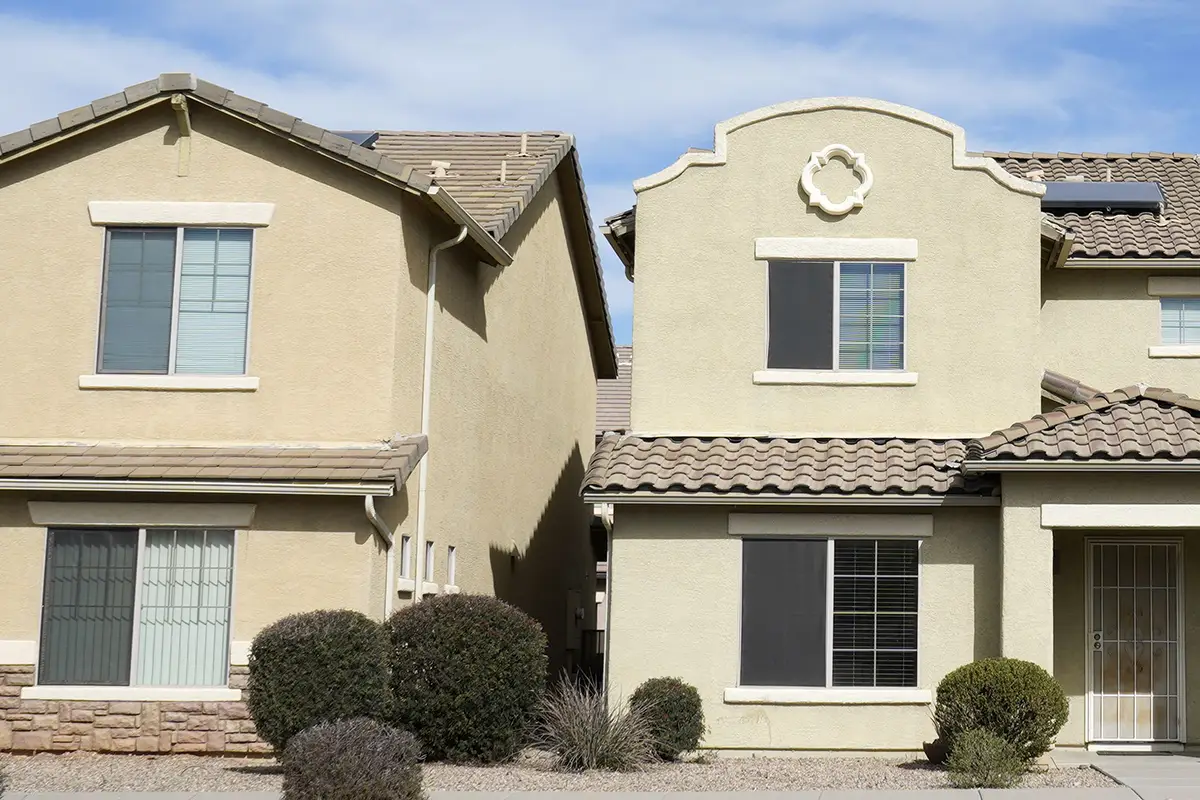
As a leading window cleaning company serving North Scottsdale communities such as DC Ranch, Silverleaf, Grayhawk and the Pinnacle Peak and Troon area, we’ve been asked some homeowners are often surprised to find that window cleaning quotes aren’t calculated just by the number of glass panes. If you own a two-story home, you can typically expect to pay more for a professional cleaning than a neighbor with a single-level home, even if you have the exact same amount of glass.
While a sparkling view improves curb appeal and floods your home with natural light, achieving that look on an upper level introduces a completely different set of operational variables. Professional window cleaning companies like ClearPro don’t inflate prices arbitrarily for multi-story homes. Instead, the higher rates reflect increased safety risks, specialized equipment needs, extended labor times, and architectural complexities.
Why Second-Story Windows Usually Cost More
Here are four reasons why second-story home windows usually costs more to clean than one-story home windows.
Elevated Safety Risks and Insurance Costs
The most significant factor driving up the cost of two-story window cleaning is risk management. Working off the ground inherently introduces danger. According to workplace safety statistics, falls from ladders are a leading cause of severe injuries in the residential services industry.
When a technician steps onto a ladder or walks across a roof pitch to reach an awkward window, the liability skyrockets. To protect their workers and their business, professional window cleaning companies must carry robust general liability insurance and specialized worker’s compensation policies. The premiums for these policies are substantially higher for companies that perform work above ground level. A portion of your service bill directly covers this essential insurance, ensuring that you, the homeowner, are not held legally or financially responsible if an accident occurs on your property.
The Necessity of Specialized, High-Tech Equipment
Cleaning ground-floor windows is a relatively low-tech affair, usually requiring little more than a hand scrubber, a standard squeegee, and a bucket of soapy water. Multi-story homes, however, demand an entirely different arsenal of expensive, professional-grade gear.
- Purified Water-Fed Pole Systems: Modern window cleaners frequently use telescoping carbon-fiber poles that can reach up to 40 feet in the air. These are not basic poles; they are hooked up to sophisticated multi-stage filtration tanks (using reverse osmosis and deionization) housed in the technician’s truck. This system pumps pure, mineral-free water to the glass, allowing it to dry perfectly spot-free without the need for hand-wiping. This equipment requires significant capital investment and routine maintenance.
- Heavy-Duty Extension Ladders: When poles won’t cut it—such as when removing stubborn construction debris or baked-on tree sap—cleaners must use heavy extension ladders equipped with specialized safety features like leg levelers, stand-offs (to keep the ladder from crushing your gutters), and stabilization straps.
- Personal Protective Equipment (PPE): For homes with complex rooflines, technicians must use safety harnesses, ropes, and anchor points to secure themselves while working.
Increased Labor and Time Dynamics
In the service industry, time is money. Cleaning windows on a second story slows down the pace of work dramatically, meaning a two-story house requires significantly more man-hours than a single-story layout.
First, the physical setup and breakdown take longer. Safely moving a 28-foot or 32-foot extension ladder around the perimeter of a house is a slow, methodical process. A technician must carefully scan for overhead power lines, check the ground stability, and precisely set the ladder angle before ascending.
Second, the physical strain of working at heights cannot be understated. Whether a technician is climbing up and down a ladder dozens of times a day or controlling a heavy, flexible extension pole overhead for hours, the physical fatigue slows down production. To maintain high quality and prevent fatigue-induced accidents, workers must move deliberately, which extends the duration of the job.
Navigating Architectural Obstacles and Landscape Challenges
A ground-floor window is usually easily accessible from a flat lawn or patio. Second-story windows, by contrast, are frequently positioned above complex architectural features or delicate landscaping that complicates the cleaning process.
Technicians routinely have to navigate obstacles such as:
- Below-Window Obstructions: Porches, multi-tiered decks, sunrooms, and home extensions often sit directly underneath upper windows, making it impossible to place a ladder at a standard angle. Technicians must find creative, time-consuming alternative angles of approach.
- Complex Roof Shapes: Dormer windows, clerestory glass, and skylights often require walking on steep roof pitches or navigating valleys where traditional ladders cannot reach.
- Landscape Barriers: Manicured flowerbeds, dense shrubs, rose bushes, and mature trees frequently block the path around the foundation. Working around these elements without damaging the homeowner’s expensive landscaping requires extra time, precision, and care.